
Overdo Review 2026: Why Zhang Linghe and Wang Churan’s Republican Romance Still Captivates Despite Its Flaws
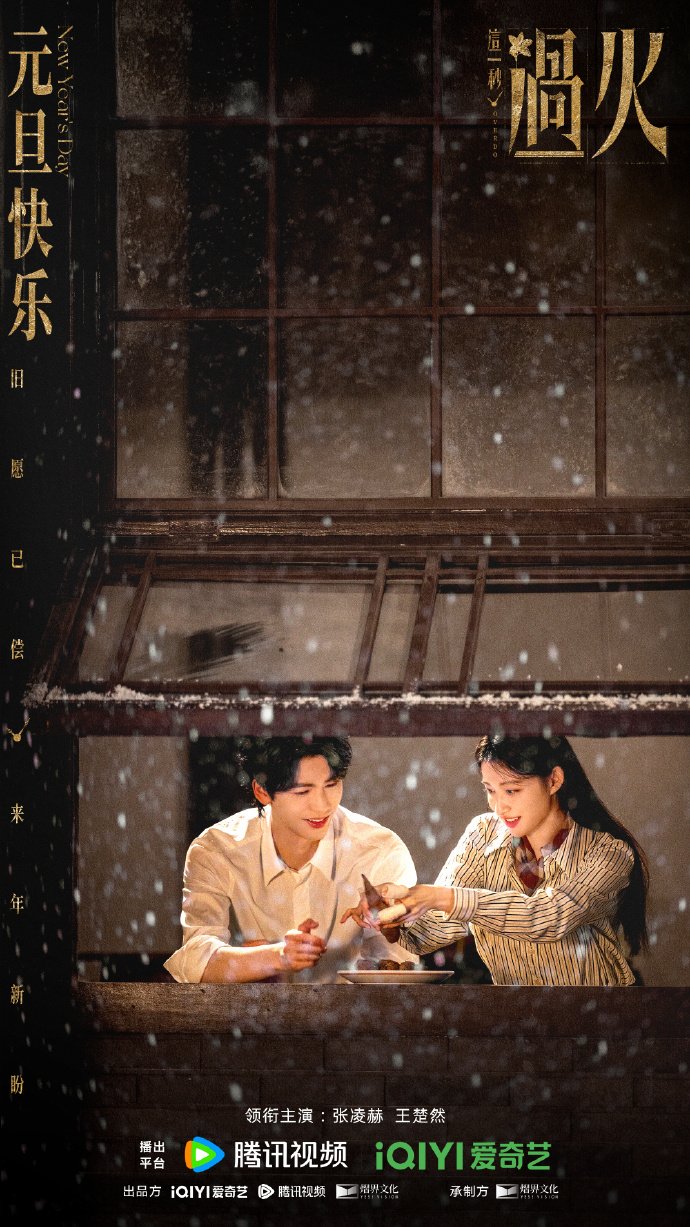
⚡ QUICK VERDICT
Overdo stumbles through clunky pacing and overheated melodrama, but Zhang Linghe’s quietly devastating performance as a man armored by grief carries the entire show on his shoulders. Wang Churan matches him with a restrained, lived-in turn that never overplays its hand. It’s messy, occasionally frustrating, and still manages to land an emotional gut-punch by the finale.
🟢 Watch If
Watch if you’re a sucker for Republican-era angst, slow-burn reunions, and lead actors who can carry a shaky script on sheer conviction. Zhang Linghe alone is worth the runtime.
🔴 Skip If
you need airtight plotting and can’t forgive melodrama for being, well, melodramatic. The flashbacks will test your patience before episode ten.
Hey drama lovers! If you’ve been scrolling through C-drama recommendations lately, chances are Overdo (这一秒过火) has already crossed your feed at least three times this week. This 33-episode Republican-era romance dropped in mid-July 2026 on iQIYI and Tencent Video carrying a lot of weight on its shoulders — big expectations, gorgeous trailers, and the kind of on-paper chemistry that makes fans start shipping before episode one even airs.
Adapted from Fei Wo Si Cun’s novel, it promised deep emotion, tangled identities, second chances, and that soft, smoky 1920s–1930s Shanghai atmosphere we can never seem to get enough of.
I went in with a warm drink, a blanket, and the kind of open heart this genre demands of you. What I got back was messier than I expected — a series that reaches for something genuinely moving, trips over its own ambition more than once, and still, somehow, left a soft bruise on my chest by the finale. Mostly because of two people doing career-best work in the middle of all that noise.
A Story Built on Fate, Pain, and Second Chances

At its heart, Overdo follows Murong Qingyi (Zhang Linghe), the youngest son of a powerful warlord family who was switched at birth and spent years being raised under harsh, often cruel conditions because of it. As a teenager fleeing that life, he’s rescued by Ren Susu (Wang Churan), an orphan quietly carrying scars of her own.
What starts as survival slowly, believably, turns into love — and then fate does what fate does in this genre: it turns cruel. To protect the people she loves, Susu fakes her own death, and Qingyi is left shattered, wrongly imprisoned, and marinating in grief that curdles into resentment.
Three years pass. She comes back under a new name — Fang Mulan — now engaged to Qingyi’s own older brother. Suddenly they’re forced back into the same rooms, the same dinners, the same unbearable proximity: one man burning with betrayal he doesn’t understand, one woman sitting on a truth she can’t yet say out loud.
Family politics tighten around them like a fist. Secrets keep pressing harder. And eventually the wider chaos of the era forces both of them to answer the same question — can love survive this much damage, or does it just learn to live alongside it?
It’s classic melodrama scaffolding — switched fates, faked deaths, love curdled by hurt, a nation in upheaval in the background — laced with mystery and social undercurrent. On paper, genuinely rich material.
In practice? The storytelling sometimes works against itself. The early episodes hop between past and present so frequently that the emotional momentum keeps getting interrupted right when it should be building. Several plot turns land without enough runway — you feel the writers reaching for a gut-punch before they’ve earned it.
A handful of scenes tip into the overly theatrical, and the dialogue occasionally stiffens up in a way that yanks you out of the moment just as you’re settling in. The emotional register also sits at “intense” almost constantly, which starts to wear thin stretched across 33 episodes — there’s not always room to breathe.
And the production polish, including some of the visual effects and an early opening sequence, doesn’t quite match the prestige the subject matter is reaching for. Small things, but they add up, and they keep Overdo from the graceful balance the best Republican-era dramas manage to pull off.
Where the Heart Still Wins

And yet — it never fully loses its pulse. There’s real sincerity buried in this central relationship: two people who once saved each other, then wounded each other without meaning to, now trying to find their way back while the ground keeps shifting under them. When the show finally slows down and just lets a quiet moment sit, you feel the full weight of everything these two have lost. Those are the scenes that stay with you.
The costumes and period detail do a lot of quiet heavy lifting too — soft lighting, tailored silhouettes, that particular melancholy that only 1930s Shanghai seems to hold. Those pockets of visual and emotional stillness are what keep the show from tipping over under its own excess, and they give it a warmth that outlasts the frustration.
What genuinely elevates Overdo, though — what makes the whole uneven ride worth it — is the acting.
Wang Churan brings a steady, layered stillness to Ren Susu / Fang Mulan. Navigating a dual identity, buried guilt, leftover tenderness, and hard-won resilience is a lot to hold at once, and she does it with restraint rather than spectacle. Nothing about her performance reaches for attention — it just sits there, worn-in and honest, and it’s more affecting for it. The supporting cast rounds things out nicely too, sketching a wider web of shifting loyalties and half-hidden motives that gives the central romance a bigger, more textured world to live in.
Zhang Linghe’s Acting Merit: The Series’ Clear Bright Spot

If there’s one reason to actually sit through all 33 episodes, it’s Zhang Linghe.
Murong Qingyi is not an easy role, and it’s arguably one of the most demanding things he’s taken on. This isn’t a straightforward romantic lead — he’s a man shaped by childhood abuse, devastating loss, and the kind of hardening that comes from both. Zhang plays that coldness and suspicion without ever letting you lose sight of the fractured person still underneath it, and that balance is genuinely hard to pull off.
The moment he first lays eyes on the woman he thought was dead. The carefully controlled fury tangled up with reluctant, almost involuntary care. The quiet devastation that flickers across his face for half a second before he locks it back down. These are the scenes that linger long after the episode ends, and they land almost entirely because of what Zhang is doing with posture, gaze, and the smallest shift in expression — often doing more with a look than the script gives him in dialogue.
It’s a performance of real complexity. He carries the emotional center of this drama on physical presence alone, turning what could easily have been a flat, one-note “brooding wounded hero” into someone whose pain and reluctant hope actually feel lived-in. It’s the clear standout of the series, and a solid reminder of just how much quiet power this actor can bring when he’s given the room to use it.
Final Thoughts: Worth Watching with Soft Expectations
Overdo is not a polished triumph, and it won’t pretend to be one if you go in expecting airtight plotting. Its storytelling strains under its own ambitions in places, its dramatic instincts occasionally run hot, and its technical choices sometimes undercut the very atmosphere it’s working so hard to build.
But the central performances — especially Zhang Linghe’s carefully observed portrait of a man both armored and broken — give the whole thing a heartbeat that refuses to quit on you. The themes of forgiveness, trauma, and choosing connection in the middle of chaos still land with enough honesty to matter, even when the plot around them wobbles.
If you’re drawn to period atmosphere, high emotional stakes, and lead performances that do genuine heavy lifting, Overdo gives you more than enough to hold onto across its run. It’s imperfect. It’s a little too passionate for its own good in places. But it’s also unmistakably human. The rough edges are obvious — so is the care the actors poured into every scene. Sometimes a drama doesn’t need to be flawless to leave a mark. Overdo leaves one anyway.
I finished it somewhere between mildly frustrated and genuinely moved — which, honestly, feels like exactly the right way to feel about the story it was trying to tell.