
You’re Not Supposed to Hate Her: The Dark Feminism of Princess Wanning From The Double
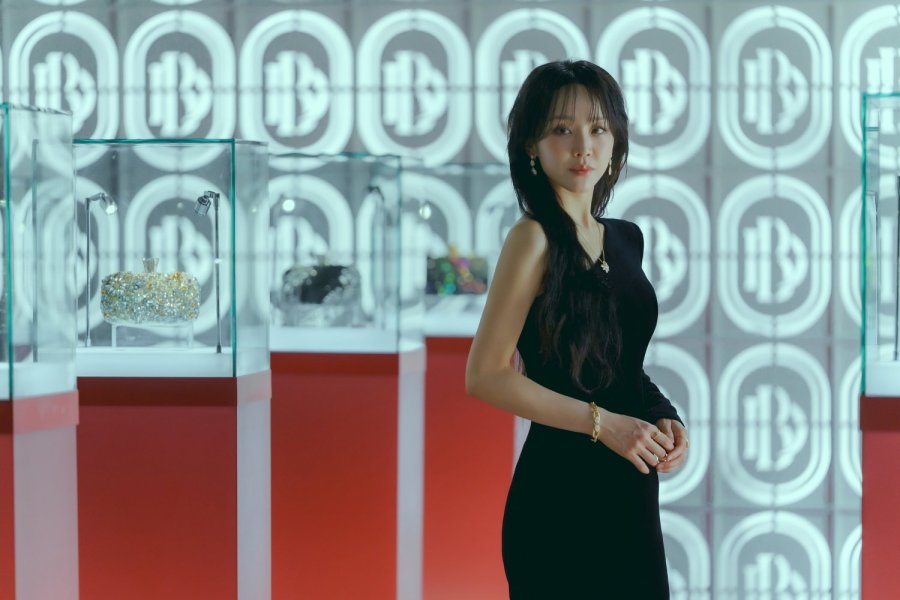
Princess Wanning (played by Li Meng) is arguably The Double (墨雨云间) most compelling creation—not because she is likable, but because the show refuses to grant you the comfort of pure hatred. She occupies a notoriously difficult space in C-drama storytelling: the “mad” antagonist whose psychosis is logical, traceable, and—crucially—manufactured by the very system that condemns her.
The Gilded Cage: Who She Appears to Be

On the surface, Wanning is the late emperor’s favored daughter, shielded by her full-blood brother Prince Cheng, and wielding more raw power than most of the princes around her.
That early context is vital: she was never built for hardship; she was built for indulgence.
By the time the main plot begins, Princess Wanning presents as a volatile, entitlement-drunk, heavily intoxicated tyrant who views violence as a casual solution. She moves through the court so unchecked that even the reigning emperor walks on eggshells around her—a dynamic that feels narratively bizarre until her past is unraveled.
Critics have split into two camps:
- The Tragic Archetype: Calling her one of the most complex, layered C-drama villains in recent years.
- The Cynical Tyrant: Dismissing her as a princess drunk on power who weaponizes her past to buy permanent immunity.
The brilliant tension of the character is that both readings are true at once.
The Hostage Years: The Hinge of Her Destruction

Everything about Wanning shifts the moment her backstory comes into focus. As a young girl, she was handed over to the rival Dai state as a political bargaining chip—sacrificed by her own father in a geopolitical negotiation she had no power to stop.
Her years in Dai were a nightmare of degrading conditions, physical abuse, and torture. Later demoted to a concubine’s standing, she endured repeated miscarriages that left her permanently infertile.
The political cruelty here is absolute: the moment her father selected her, he declared that a daughter’s life was secondary to his sons’ political survival. No amount of prior doting could erase that calculus.
Princess Wanning returns home not as a princess, but as a traumatized survivor. The royal court’s response to her trauma, however, is not accountability or healing—it is guilt-driven impunity. Her father grants her absolute license to commit atrocities because he cannot face the horror of what he allowed to happen to her.
This reaction is far more toxic than punishment: it teaches Wanning that her suffering is a currency that can be cashed in indefinitely for absolute power.
The Anatomy of Her Madness

Once grounded in her trauma, Wanning’s actions cease to look like random malice and reveal a terrifying internal logic:
- Entitlement as Armor: Having once been stripped of all agency in a foreign court, Princess Wanning resolves never to be powerless again. For Wanning, control is no longer a luxury—it is a calcified survival mechanism.
- Love as Hostage-Taking: Her obsession with Shen Yurong is not romantic; it is predatory acquisition. She needs to own him so entirely that he can never be ripped away from her the way her body, freedom, and fertility were. She schemes, poisons, fakes a pregnancy, and murders to possess him—consuming affection the way a starving person consumes food, devoid of restraint or self-awareness.
- Grievance as Absolution: She weaponizes the belief that “the entire country owes her” to justify inflictions of cruelty upon innocent people—most notably Fang Fei. This is where audience sympathy reaches its limit: trauma explains her monster, but it does not excuse her victimizing others.
- The Cycle of Betrayal: In the end, Wanning becomes complicit in her own undoing. She kills her father, conspires with Prince Cheng, and is ultimately discarded by Shen Yurong to serve someone else’s political ambitions. She dies re-enacting the exact trauma that broke her: weaponized, then thrown away by the people who claimed to value her.
A System That Manufactures Monsters

Wanning’s arc does not offer redemption; she does not grow, nor does she soften. Instead, her narrative acts as a systemic diagnosis.
The show is less interested in whether she deserves forgiveness than in methodically demonstrating how a imperial system that treats women as disposable trade assets inevitably creates its own monsters. Through this “madwoman” archetype, the drama indicts feudal patriarchy rather than simply delivering a chaotic villainess for shock value.
While the plot occasionally strains credulity regarding how she maintains such total impunity onscreen, the psychological profile remains airtight. A girl traded off for statecraft and tortured in isolation is brought home and handed unlimited power by a remorseful father. That origin story produces exactly the desperate, entitled, and fatal force of nature that tears the story apart.
Performance: The Engine of the Tragedy

Li Meng’s performance is the crucial anchor that keeps this role from veering into camp. Critics overwhelmingly point to her portrayal as the emotional core of the series.
She inhabits the character with remarkable simultaneity: she is psychotic and ruthless, yet visibly pitiful and starved of love in the exact same frame. You are never asked to choose between despising the monster she became and grieving for the child left behind at a negotiating table. The drama demands that you hold both truths at once.
.webp "Zhang Linghe vs. Hou Minghao: How Pursuit of Jade and Key to the Phoenix Heart Redefine the Cold General")