Fangs of Fortune’s Li Lun Was Never the Villain — He Was the Wound That Never Closed
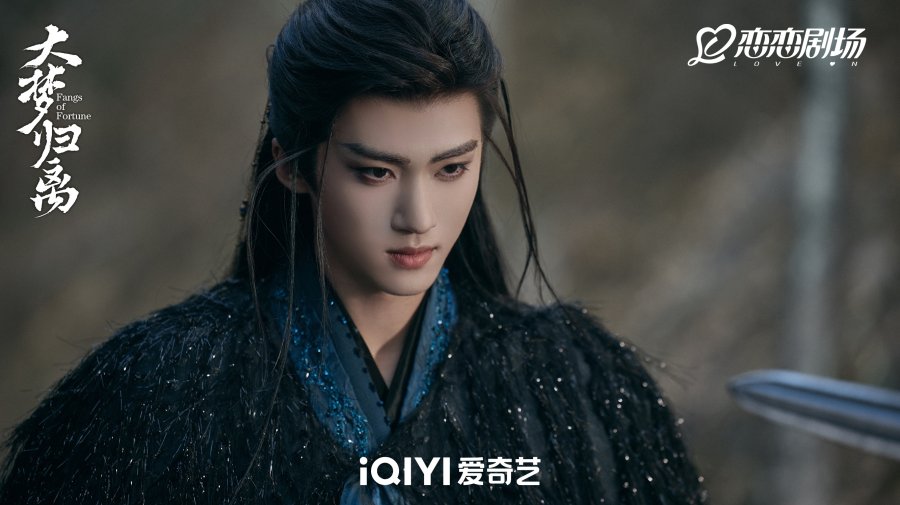
There’s a particular kind of antagonist that a story only gets to use once in a while — the one you can’t bring yourself to root against, no matter how much wreckage he leaves behind. In Fangs of Fortune, that character is Li Lun. Played by Yan An with a rawness that keeps sneaking past the character’s own cruelty, Li Lun isn’t really a villain in the traditional sense. He’s a wound that never closed, wearing centuries of power like a bandage.
An Old Thing, Grown Bitter Slowly

Li Lun isn’t born from trauma in the way most tragic antagonists are — he’s born from a pagoda tree, an ancient and rooted thing, the kind of being that doesn’t experience life so much as it endures it, decade after decade, century after century. That detail matters more than it seems to at first. Most people who become cruel do so quickly, in response to some sharp injury. Li Lun’s cruelty was slow-grown. It had centuries to compost.
Before any of the demon-hunting, before any of the plotting against the people who now surround his former best friend, Li Lun and Zhu Yan were simply that — best friends. Something happened eight years before the story begins that broke that bond entirely, ending with Li Lun sealed away by the Bai Ze goddess herself.
Whatever the details, the emotional shape of it is unmistakable: he lost the one relationship that had made all that endless time bearable, and he lost it in a way severe enough that the universe itself stepped in to lock him away from it.
That’s not the origin story of someone who wanted to conquer the world. That’s the origin story of someone who wanted, badly, to be un-alone — and failed.
The Philosophy of Someone Who Stopped Expecting Kindness

What makes Li Lun compelling rather than just menacing is that his worldview isn’t random malice — it’s argued. He genuinely believes that survival of the fittest is the only honest law of existence, that the weak have no real claim to protection, that fairness is a story people tell each other rather than a fact about how the world works.
You don’t arrive at that philosophy overnight. You arrive at it by watching, for a very long time, cruelty get rewarded and gentleness get punished, until eventually the only way to stop being hurt by that pattern is to agree with it.
It’s a coping mechanism dressed up as a worldview. And it’s devastating precisely because it’s coherent — Li Lun isn’t wrong that the world he’s lived in has often worked exactly the way he describes. He’s just wrong about what to do with that knowledge.
Obsession as Mourning

The engine of Li Lun’s entire arc is his fixation on Zhu Yan — a pull so old and so unresolved that it curdles into something that looks, from the outside, like obsession. He can’t stand watching Zhu Yan build a new life. He targets the people Zhu Yan has let close to him: Zhuo Yichen, Wen Xiao, the found family assembling itself around his former best friend. It would be easy to read this as simple jealousy, but I think it’s something closer to grief that never got to finish grieving.
When someone you loved moves on and builds a life that has no room for the version of the relationship you remember, it can feel less like being replaced and more like being told the whole thing meant less than you needed it to.
Li Lun doesn’t know how to sit with that feeling. He only knows how to act on it — and because he’s spent centuries convincing himself that only the strong get to keep what they want, acting on it means trying to tear the new life down rather than grieving the old one and letting go.
It’s the tragedy of someone who never learned there was a third option between possess and destroy.

The People Who Wouldn’t Let Him Go
The most quietly moving part of Li Lun’s story isn’t anything he does — it’s what the people around him refuse to do. Even as Li Lun works against him, Zhu Yan never stops trying to protect him, going so far as to beg for his life when the moment comes that it’s on the line. And Zhuo Yichen — who by every rule of the plot has every reason to let Li Lun go — instead chooses to preserve the last fragment of him that can be saved.
There’s something almost unbearably tender about that, if you sit with it. Li Lun spends the entire story terrified of being discarded, certain that the world runs on who’s strong enough to be kept around. And the final gesture anyone makes toward him is the opposite of discarding — it’s keeping, in whatever small, damaged form is still possible.
Setting the Armor Down

His ending is where all of this pays off. The character who spent the whole series arguing that the weak deserve no mercy chooses, in his last act, to give everything he has left — his own power, his own life — to protect the very realm of lesser demons he’d once said should be swept aside. It’s not a twist. It’s the truth of him finally getting to surface, once the armor of “survival of the fittest” isn’t the only thing standing between him and being hurt again.
That’s what makes Li Lun stick with you after the credits roll. He was never actually a believer in cruelty. He was someone who’d been alone long enough to mistake cruelty for safety — and who, given one more chance and a handful of people who refused to give up on him, remembered how to choose differently.
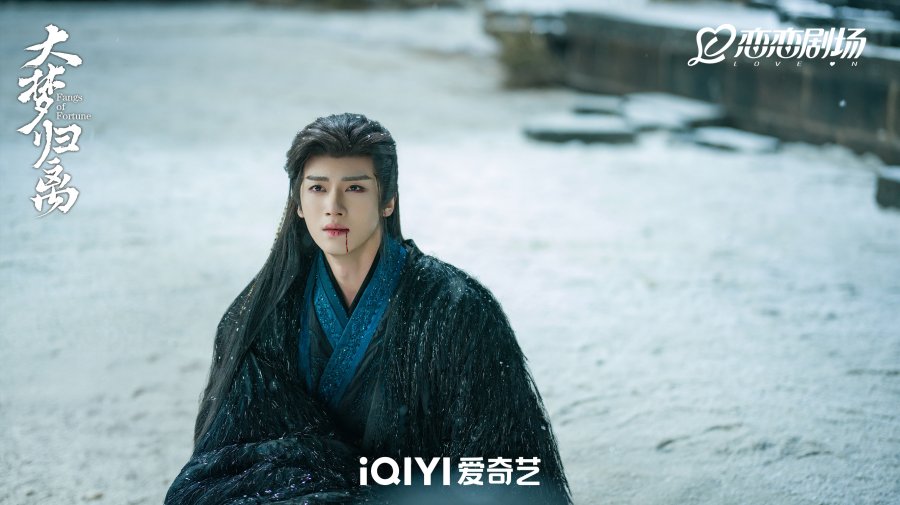
Yan An plays all of this without ever once making Li Lun feel like a redemption-arc cliché. The vulnerability is there from very early on, if you’re watching for it — in the way his anger always seems to be standing in front of something softer, trying to keep it hidden. By the end, you’re not surprised he chose to save people. You’re only sorry it took him so long to believe he was allowed to.

.webp "Zhang Linghe vs. Hou Minghao: How Pursuit of Jade and Key to the Phoenix Heart Redefine the Cold General")