


In the vast landscape of Japanese dramas, where tales of unrequited longing and societal pressures often unfold against cherry blossom backdrops or bustling Tokyo streets, Learning to Love (original title: Ai no Gakko) emerges as a quiet revolution. Airing from July 10 to September 18, 2025, on Fuji TV and streaming globally on Netflix, this 11-episode series crafts a romance that’s as much about personal redemption as it is about forbidden connection. At its core is the unlikely bond between a 35-year-old high school teacher trapped in the vise of familial expectations and a 23-year-old host navigating the glittering yet treacherous world of nightlife entertainment. Directed by Hiroshi Nishitani and penned by Yumiko Inoue, the drama doesn’t just tug at heartstrings—it wraps them around themes of literacy, independence, and the human cost of judgment, delivering a slow-burn narrative that’s profoundly moving.

Learning to Love (Ai no Gakko) – Overview and Why It Captivated Audiences in 2025
Premiering on Fuji TV in July 2025 and quickly landing on Netflix worldwide, Learning to Love (original title Ai no Gakko) is an 11-episode romantic drama that has quietly become one of the year’s most talked-about Japanese series. Directed by Hiroshi Nishitani and written by Yumiko Inoue, the show stars Fumino Kimura opposite Snow Man’s Raul (Raul Murakami) in his breakout acting role. Currently sitting at a solid 7.8 on MyDramaList and 7.4 on IMDb, it has earned praise for its mature storytelling, emotional depth, and sensitive handling of rarely explored social issues.
Plot Summary Without Spoilers: A Teacher and a Host Rewrite Their Futures Together
Ogawa Manami is a 35-year-old high school teacher whose life has been shaped almost entirely by duty. Living under the iron grip of her traditional father and facing an arranged marriage she never wanted, her days are a cycle of responsibility and quiet resignation. Everything changes the night she storms into a high-end host club to rescue a troubled student and meets Takamori Taiga, better known by his host name “Kaoru.” At 23, Kaoru is the club’s top earner—charismatic, dazzling, and secretly unable to read or write due to an undiagnosed learning disability.

What begins as a pragmatic exchange—reading lessons for genuine human connection—slowly blossoms into something neither of them expected. Through late-night tutoring sessions in quiet cafés and empty classrooms, two people from opposite worlds teach each other far more than letters and words. The series explores adult illiteracy in Japan, the hidden cost of the host club industry, generational trauma, and the courage it takes to choose yourself when everyone else has already decided who you should be.
Cast and Performances That Will Stay With You

Fumino Kimura gives what many are calling the performance of her career as Manami. She disappears completely into the role of a woman who has spent decades perfecting the art of emotional suppression. Every micro-expression, every hesitant smile, every crack in her composed facade feels achingly real. When she sits across from Kaoru patiently sounding out hiragana with a children’s train book, the tenderness is almost unbearable.
Opposite her, Raul Murakami proves he is far more than just another idol-turned-actor. His Kaoru is magnetic yet fragile, confident yet terrified of being found out. The moment in episode six when he writes his real name for the first time—slow, shaky strokes of the pen—has left entire audiences in tears. Their chemistry is the quiet, slow-burn kind that feels earned rather than manufactured, making the 12-year age gap a meaningful part of the story rather than a gimmick.
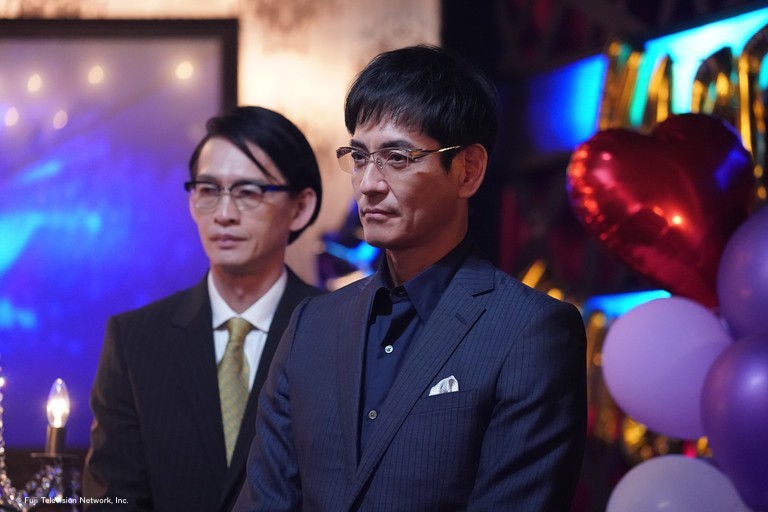
The supporting cast is equally outstanding. Mariko Tsutsui breaks hearts as Manami’s mother, a woman waking up to decades of her own silenced dreams. Minami Tanaka brings warmth and comic relief as Manami’s supportive colleague, while veterans Ikki Sawamura and Yoshi Sakou deliver nuanced portraits of parents whose love has curdled into control.
What Makes Learning to Love One of the Best J-Dramas of 2025

This is not another sugary office romance or high-school crush story. Learning to Love dares to be profoundly adult. The age-gap relationship is portrayed with maturity and mutual respect—never once does it feel predatory or unbalanced. Instead, the series uses the difference in their life stages to show how people at completely different points can still meet as equals and heal one another.
The drama’s treatment of illiteracy and neurodiversity is groundbreaking for Japanese television. Kaoru’s struggle is never exploited for cheap sympathy; it’s presented with dignity, realism, and input from learning-disability consultants. Viewers come away understanding not just the practical challenges, but the deep shame that accompanies them in a society that equates academic success with worth.
Equally brave is the show’s unflinching yet balanced look at Japan’s host club culture. There is no glitz-without-consequence glamour here, nor is the industry painted as pure evil. We see the financial traps, the emotional exhaustion, and the way workers like Kaoru must sell pieces of their soul night after night—yet we also see moments of real human connection that make the job complicated rather than cartoonishly villainous.
Perhaps most powerfully, the series becomes a multi-generational feminist story. Manami’s journey toward autonomy runs parallel to her mother’s late-in-life awakening, creating one of the most moving mother-daughter arcs in recent memory. This is a drama that understands how patriarchal expectations echo down bloodlines and how breaking the cycle takes more than one generation.
Direction, Cinematography, and a Soundtrack That Lingers

Hiroshi Nishitani directs with his trademark intimacy—soft natural light flooding empty classrooms, rain-streaked windows reflecting neon signs, lingering close-ups on trembling hands holding a pencil for the first time in years. The camera never rushes; it lets emotions breathe. The recurring piano theme “Trains of Memory” has dominated Japanese streaming charts and become synonymous with quiet, aching hope.
Minor Flaws in an Otherwise Near-Perfect Drama
The first two episodes move deliberately slowly as they establish Manami’s suffocating world, which may test viewers hungry for instant sparks. A few school-related subplots are introduced and then left somewhat unresolved, and one or two coincidences stretch believability. Yet these feel like small prices to pay for the devastating emotional payoff that arrives in the second half and never lets go.
Final Verdict: 9.0/10 – A Modern Japanese Drama Classic

Learning to Love is the rare romance that respects its audience’s intelligence and heart in equal measure. It is tender without being sentimental, realistic without being cynical, and romantic without ignoring the messiness of real life. For anyone who has ever felt trapped by others’ expectations, ashamed of a struggle no one else can see, or terrified that love requires becoming someone you’re not—this drama feels like a long, warm embrace that says, “You are already enough.”
If you cherished We Made a Beautiful Bouquet, The Full-Time Wife Escapist, or Silent, clear your schedule and your tissue supply. Learning to Love is not just one of the best J-dramas of 2025—it’s one of the most human stories Japanese television has ever told.
Where to watch: Netflix (worldwide, English subtitles available)