

Hey, fellow K-drama binge-watchers! If you’re like me, scrolling through Netflix in 2026 looking for that next fix after marathoning everything from Squid Game sequels to rom-com revivals, you might’ve stumbled upon Cashero. This 2025 Netflix original dropped like a plot twist no one saw coming – a superhero story where powers literally cost you money.
Starring the ever-charming Lee Jun-ho (you know, the guy from King the Land who can make even a bad haircut look good), it’s based on a webtoon and promises action, comedy, and a dash of social commentary on capitalism. But does it deliver, or is it just another over-hyped cash grab? Spoiler: It’s a wild ride, but not without some potholes.
Buckle up as I dive into this 8-episode frenzy in my totally biased, humor-laced review. (Word count incoming: We’re aiming for an essay because, let’s face it, K-dramas deserve epic rants.)
The Plot: Super Strength Meets Wallet Woes – Genius or Gimmick?

Okay, let’s start with the basics. Cashero follows Kang Sang-woong (Lee Jun-ho), your average Joe – or should I say, average broke dude – who’s drowning in debt and working dead-end jobs to support his family. One day, bam! He discovers he has superhuman strength… but only as strong as the cash he’s holding. Like, if he’s got a crisp 10,000 won bill, he can lift a car. Empty pockets? He’s weaker than a wet noodle. It’s like if Superman had to pay a subscription fee for his cape.
The show kicks off with Sang-woong accidentally discovering his powers while trying to save someone (classic hero origin, amirite?), and soon he’s roped into a world of other “extras” – people with abilities that also drain their bank accounts. There’s a telekinetic girl who pays per object moved, a speedster who bills by the mile, and villains who are basically evil CEOs hoarding power (pun intended). The main antagonist is this shadowy organization that’s like Hydra meets Wall Street, exploiting these powers for profit.
Humor-wise, the premise is gold. Imagine a fight scene where the hero pauses to hit up an ATM mid-punch – that’s Cashero in a nutshell. Early episodes nail the comedy, with Sang-woong robbing banks (ethically, sorta) to fund his heroism, leading to slapstick chases and awkward family dinners where he hides his bruised ego under a pile of ramen noodles. But as the plot thickens, it starts feeling like the writers threw in every trope: Corporate conspiracies, tragic backstories, and a love triangle that’s about as stable as the Korean won during inflation.
By episode 4, we’re deep into action territory, with explosions that rival Michael Bay’s wet dreams. The social commentary sneaks in – powers as a metaphor for wealth inequality? Chef’s kiss. But does it stick the landing? Eh, it’s more like a belly flop. The ending ties up loose ends with a big “save the world” battle, but it feels rushed, like they ran out of budget (meta, huh?). Overall, the plot’s a solid 7/10: Fun gimmick, but it could’ve used more depth instead of just more dollars.
Characters: From Cash Kings to Emotional Bankrupts
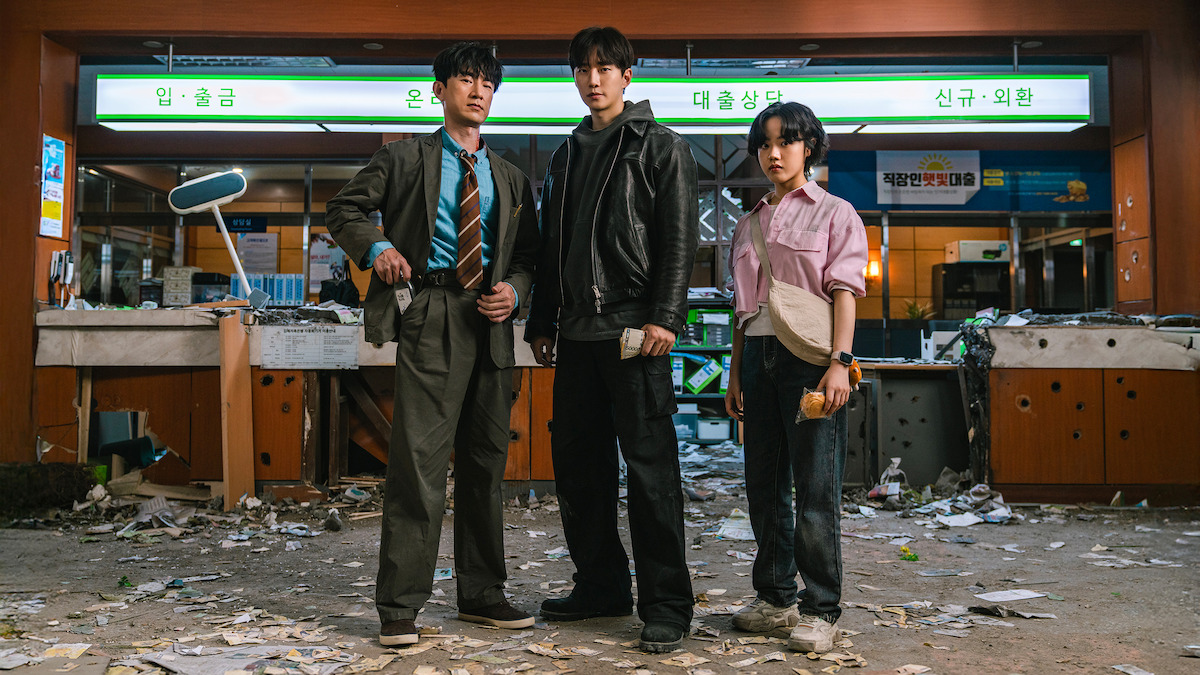
Let’s talk peeps, because K-dramas live or die by their casts. Lee Jun-ho as Sang-woong is the MVP – he’s got that boy-next-door charm mixed with action-hero grit. Watching him go from “I can’t afford coffee” to “I can bench-press a truck if I sell my kidney” is hilarious. His facial expressions during power-ups? Priceless. It’s like he’s channeling his inner Deadpool, quipping about how heroism is bad for his credit score.
Then there’s Kim Hye-jun as Kim Min-suk, Sang-ung’s practical, money-loving fiancée who’s the ultimate voice of reason. She’s smart, inventive, and their chemistry sizzles – banter that’s part Crash Landing on You, part The Boys. But her arc? A bit shortchanged. She starts strong, dishing out sassy advice on “affordable heroism,” but later slides into more supportive sidekick territory. Writers, give her more spotlight next time!
The supporting squad pops in places. Kim Hyang-gi as Bang Eun-mi, the young extra with telekinesis that burns through calories (talk about a diet plan gone wrong), adds the heart – her mentor-mentee vibes with Sang-ung are adorable, like Spider-Man guiding a calorie-counting sidekick.

The villains, led by the power-hungry Jo siblings – Jo Anna (Kang Han-na, channeling ice-queen energy from Moon Lovers) and Jo Nathan (Lee Chae-min, fresh off villain vibes in other roles) – are deliciously over-the-top. They’re all about stealing powers and chaos, spouting lines like “Strength is for the wealthy” with maniacal flair. Campy, but it works.
Humor highlight: A side character who’s a healer but charges hospital rates. Every time he patches someone up, he pulls out a receipt. I cackled. But not all characters land – some extras feel like filler, popping in for a fight then vanishing faster than my savings on payday. Still, the ensemble keeps things lively, even when the script falters.
Action and Visuals: Explosions on a Shoestring (Literally)

Visually, Cashero is a treat – Netflix money shows in the CGI. Powers manifest with flashy effects: Sang-woong’s strength glows green like Hulk on a budget, and fight scenes are choreographed like John Wick with a Korean twist (lots of taekwondo flips). Episode 6’s bank heist-turned-super-brawl? Chef’s kiss. It’s chaotic, funny, and has more slow-mo punches than a Zack Snyder film.
But here’s the rub: The “cost” mechanic leads to creative kills. Villains drain heroes’ wallets mid-fight, turning battles into economic warfare. Imagine dodging bullets while checking your bank app – relatable AF in 2026’s economy. The humor amps up when powers fizzle out: Sang-woong yeeting a bad guy, only to drop him because he spent his last won on gum. Gold.
Downsides? Some effects look janky, like early-2000s green screen. And the pacing – whew. Early eps zip by, but later ones drag with exposition dumps. It’s like the director said, “More talking, less cashing!” Still, for a mid-tier K-drama, it punches above its weight (see what I did there?).
The Laughs: Comedy That’s Rich in Puns, Poor in Subtlety

Humor is Cashero’s secret weapon. The show doesn’t take itself seriously, which is refreshing in a genre full of brooding Batmans. Puns abound: “I’m broke… literally!” or “Superpowers? More like super bills!” It’s dad-joke level, but delivered with such enthusiasm it works. Lee Jun-ho’s comedic timing sells it – his deadpan reactions to absurd situations had me pausing to laugh.
Satire hits hard too. In a world where the rich get richer powers, it’s a jab at inequality. Sang-woong’s struggle to “afford” heroism mirrors real-life hustles, making it timely post-pandemic. Funny moments: A training montage where he lifts weights… by stacking cash. Or a villain monologuing about world domination while his power meter dings like a gas pump.
But not all jokes land. Some fall flat, like repetitive “I’m poor” gags that wear thin by episode 5. And the romance? It’s cute but forced, with awkward confessions amid chaos. “I love you… but can you spot me 50,000 won?” Eye-roll. Overall, the comedy carries the show, earning it bonus points for not being another grimdark fest.
Flaws and Fumbles: Where It Loses Its Cash Flow

No review’s complete without the tea. Cashero has issues, folks. The writing’s messy – plots twist more than a pretzel, but not always logically. Why do powers cost money? The lore’s vague, like the writers forgot to explain after the pilot. Characters’ motivations flip-flop: One ep, Sang-woong’s all “hero for justice!”; next, “Screw it, I’m buying a yacht.” Consistency, please!
Pacing’s a rollercoaster – fast action, slow drama. The 8-episode format helps, but it crams too much, leaving subplots dangling like loose change. Social commentary starts strong but fizzles into generic “money bad” vibes. And the ending? Satisfying but predictable, with a teaser for season 2 that screams “Netflix renewal bait.”
Critics are mixed – some call it fun fluff, others a wasted premise. Me? It’s entertaining but forgettable, like that impulse buy you regret but kinda enjoy.
Final Verdict: Stream It or Skip It? (And Why It’s Still Worth a Watch)

So, is Cashero the K-drama hero we need in 2026? Kinda. It’s a breezy, humorous take on superheroes that blends action, laughs, and heart. Lee Jun-ho carries it like he’s got infinite cash, and the premise is fresh enough to stand out in a sea of time-travel rom-coms. If you’re into light-hearted chaos with a side of satire, queue it up – perfect for a weekend binge with popcorn (and maybe check your bank balance first).
Score: 7.5/10.
Strengths: Hilarious concept, solid cast, fun fights.
Weaknesses: Shaky plot, underdeveloped arcs. Skip if you want deep drama; stream if you need a laugh.
In a year of heavy hitters like Trigger, Trunk, Cashero is the quirky underdog that might just steal your heart… or at least your streaming time.
P.S. If they make season 2, please give us more wallet puns. We deserve it.(Whew, ESSAY. Told ya it’d be epic!)
Read: Typhoon Family: A Storm of Resilience in the Eye of Korea’s Economic Hurricane
Watch Trailer: