

In the crowded landscape of 2025 Chinese historical dramas, The Prisoner of Beauty arrives like a perfectly aimed arrow: sleek, dangerous, and impossible to ignore. Adapted from Peng Lai Ke’s beloved web novel, this 36-episode Tencent production premiered in May 2025 and immediately stormed the charts, hitting over 26,000 heat index points on its opening day and earning rave word-of-mouth for its razor-sharp chemistry and gorgeous production, and refreshingly mature romance. Directed by Deng Ke (Guardians of the Dafeng) with a screenplay led by Nan Zhen (The Romance of Tiger and Rose), it stars Song Zu’er as the clever, resilient Xiao Qiao and Liu Yu Ning as the vengeful warlord Wei Shao. What could have been just another “forced marriage + revenge” story instead becomes one of the year’s most addictive slow-burn romances.
The premise is deliciously simple yet loaded with tension. The Qiao and Wei clans have hated each other for fourteen years after the Qiaos abandoned the Weis on a battlefield, costing Wei Shao his parents and nearly his entire family. To end the blood feud, the Qiao patriarch offers his youngest daughter, Xiao Qiao, as bride to the new Marquis Wei Shao, who has spent his life sharpening himself into a weapon of retribution. He accepts the marriage not for peace, but to keep his enemy close. Xiao Qiao, far from a trembling sacrifice, walks into the lion’s den knowing exactly what awaits her. Their wedding night is less consummation and more declaration of war: he vows to destroy her family; she vows to survive him. And then, slowly, maddeningly, they start bending toward each other.

The title itself (折腰, literally “to bend at the waist” or “to yield”) is perfect. Both leads are prisoners of duty, pride, and old wounds, and the entire drama is about watching two iron-willed people learn how to bend without breaking. What makes this enemies-to-lovers arc stand out is the complete absence of Noble Idiocy™. They scheme, they lie, they test each other mercilessly, but they also talk. A lot. And somehow those conversations, sharp, sarcastic, laced with history and hurt, become the sexiest foreplay the genre has seen in years.
Script & Screenplay: Witty, Mature, Occasionally Overstuffed
Nan Zhen’s screenplay is a masterclass in controlled tension. The dialogue snaps with intelligence: Xiao Qiao’s sweet-sounding barbs that leave bloodless cuts, Wei Shao’s gravel-voiced threats that somehow sound like love confessions. The first 20 episodes are near flawless, balancing mind games in the inner courtyard with larger political maneuvering and battlefield sequences. Flashbacks to the original betrayal are used sparingly but devastatingly, never overwhelming the present-day story.
The back half, however, shows signs of post-production trimming. Some clan conflicts that were clearly meant to span multiple episodes get resolved abruptly, leaving minor plot threads dangling. The Su family arc and certain betrayals feel rushed or underwritten, a common casualty of mainland censorship and episode-count restrictions. Still, even when the larger political canvas gets messy, the core romance remains rock-solid. There is no third-party love triangle nonsense, no prolonged misunderstandings for angst’s sake. When these two fight, they fight with words, and when they make up, it’s earned. That alone makes the drama feel revolutionary.
Acting: Chemistry That Could Power a Small City
Song Zu’er delivers a career-defining performance as Xiao Qiao. After years away from the spotlight, she returns with a quiet ferocity that silences every doubter. She plays Xiao Qiao as someone who has learned to weaponize gentleness: soft voice, lowered lashes, and a smile that can hide either affection or a knife. The way her eyes shift from calculating to vulnerable in a single heartbeat is mesmerizing. Yes, there are moments where her youthful face slightly undermines the “seasoned survivor” vibe, but she sells the older soul beneath the porcelain skin so convincingly that it becomes an asset rather than a flaw.

Liu Yu Ning, meanwhile, is a revelation. Known more for his singing and brooding supporting roles, he steps into leading-man territory with complete authority. His Wei Shao is all coiled intensity: broad shoulders permanently hunched as if carrying the weight of fourteen years of hatred, voice like gravel dragged across silk. Early episodes deliberately ugly him up, scarred, shadowed, almost feral, so that when he finally straightens his spine and softens his gaze for Xiao Qiao, the transformation hits like a punch. Their physicality together is chef’s kiss: the way he looms over her in anger, only to find himself unconsciously stepping closer when she’s hurt; the way she flinches from his touch in episode 3 and instinctively reaches for him by episode 25. It’s the kind of palpable, slow-drip chemistry that makes you understand why ancient people wrote poetry about love.

The supporting cast is strong but never steals focus. Xuan Lu is chillingly elegant as elder sister Da Qiao, Liu Duan Duan almost runs away with every scene as Xiao Qiao’s loyal (and hilarious) maid Xiao Tao, and veterans like Liu Xiao Qing bring gravitas to the older generation. The only real weak link is a slightly underwritten second male lead whose redemption arc feels tacked-on, but he’s mercifully kept in the background.
Production Values: Gorgeous, Gritty, and Purposeful
This is big-budget historical done right. The sets are massive yet lived-in: dusty battlefields, opulent but cold Wei family halls, a bridal chamber that starts feeling like a cage and slowly becomes a sanctuary. Costume design deserves its own award: Xiao Qiao’s wardrobe literally tells the story, moving from restrictive crimson wedding robes to flowing blues and whites as she claims agency. Wei Shao’s armor is scarred and practical rather than shiny and pretty, perfectly matching his character.
Cinematography favors moody natural light and intimate close-ups. Fight scenes are surprisingly grounded: no endless wirework, just brutal, muddy, exhausting combat that makes victories feel hard-won. The OST is understated but effective, with Liu Yu Ning’s own ending theme “Feng Yue” giving goosebumps every single time it plays.
Final Verdict: 8.8/10 – One of the Best Historical Romances in Years
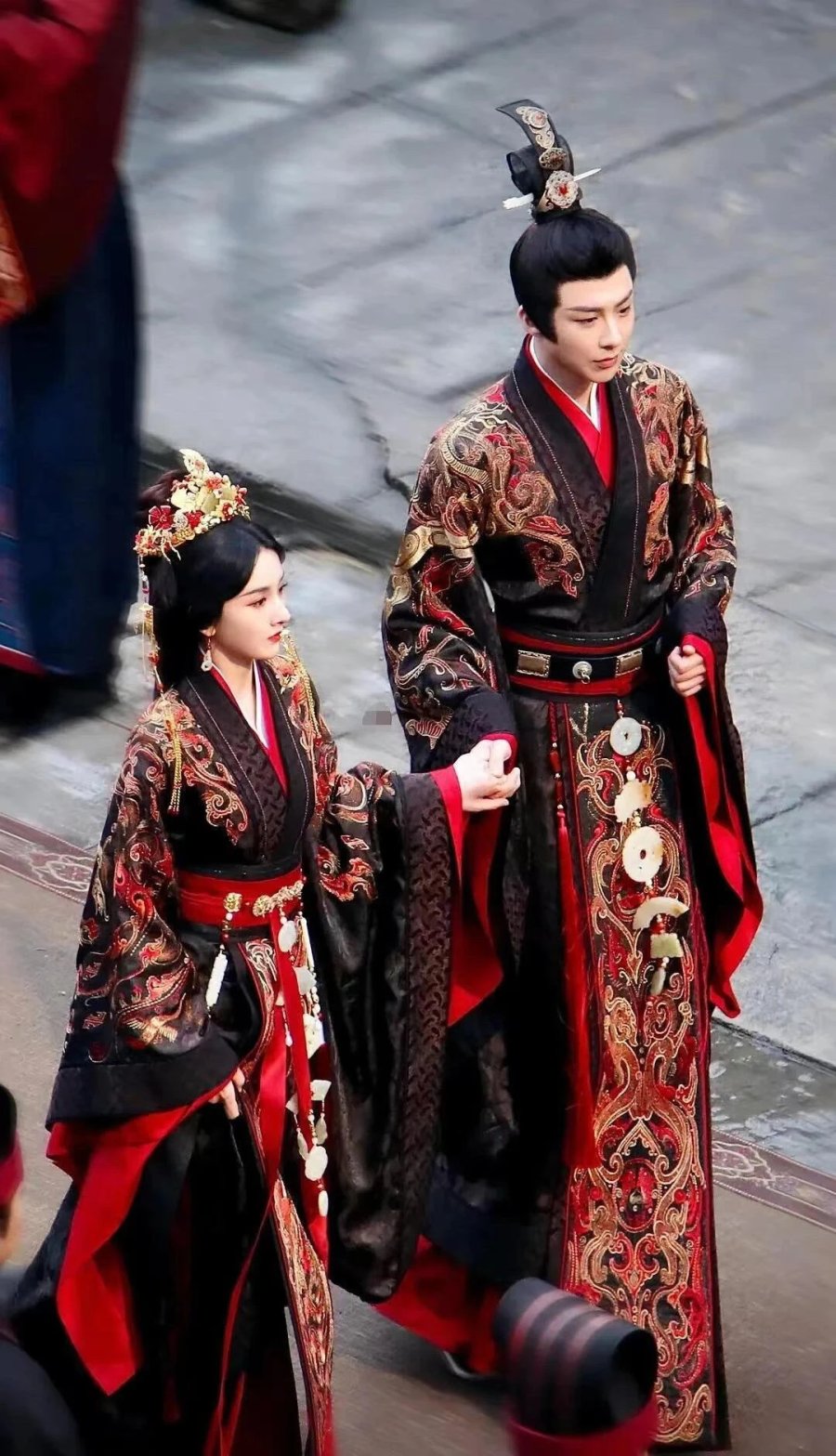
The Prisoner of Beauty is not perfect. The last six episodes suffer from obvious editing cuts, some side characters vanish without proper resolution, and a tighter 32-episode run might have been ideal. But none of that diminishes what it gets spectacularly right: a fiercely intelligent female lead who never loses her agency, a male lead whose “red flags” are acknowledged and slowly dismantled through growth rather than magic forgiveness, and a central relationship built on mutual respect and blistering attraction.
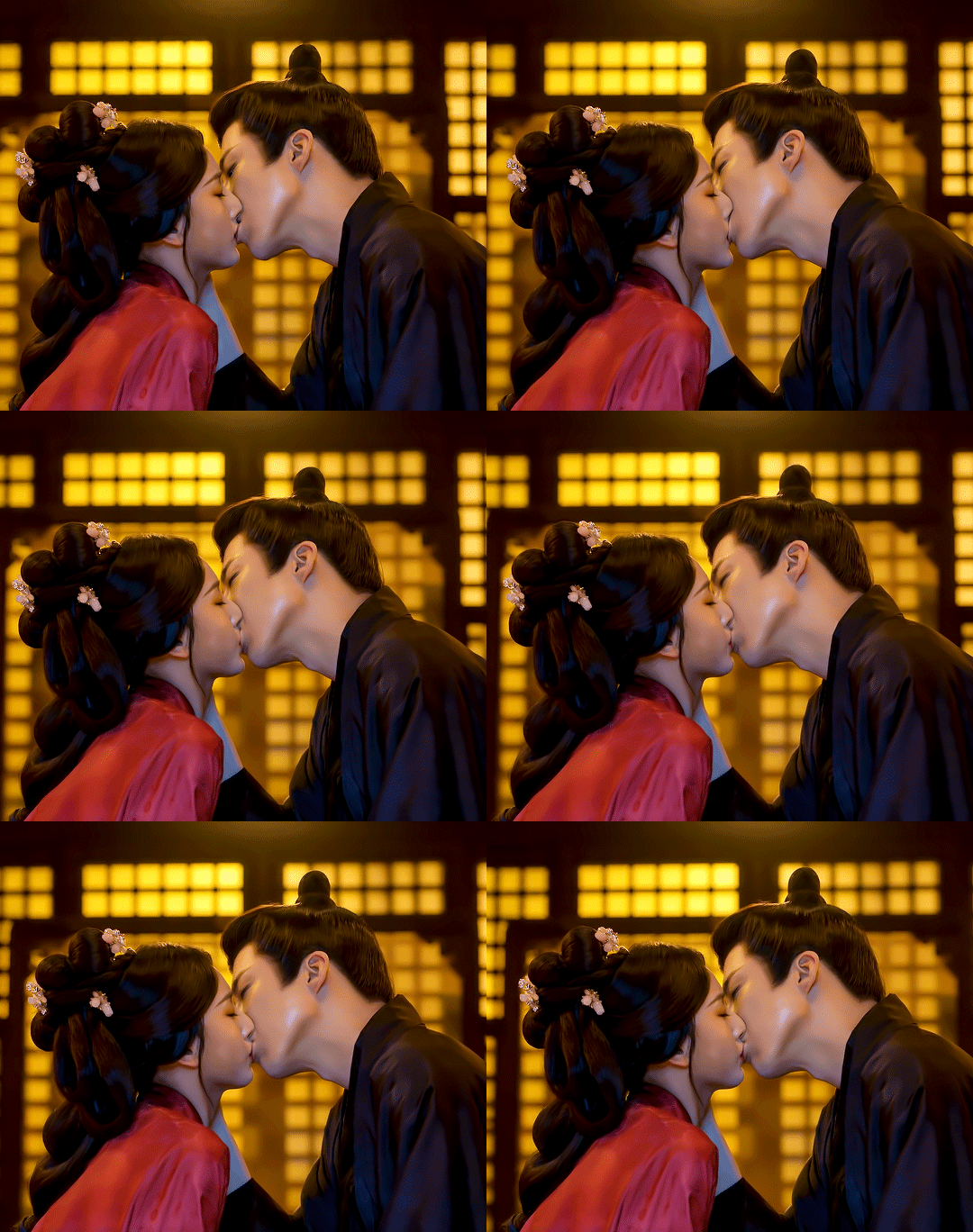
If you loved the mature couple energy of The Princess Royal, the political grit of The Double, or the delicious hate-to-love tension of Lost You Forever (but wished it had a happy ending), The Prisoner of Beauty was made for you. It’s sexy, smart, emotionally honest, and proof that enemies-to-lovers can still feel fresh in 2025. Watch it for the banter, stay for the moment Wei Shao finally kneels, not in defeat, but in surrender to the only person who ever made him want to bend.
Highly recommended. Just maybe keep a fan nearby. Things get warm.